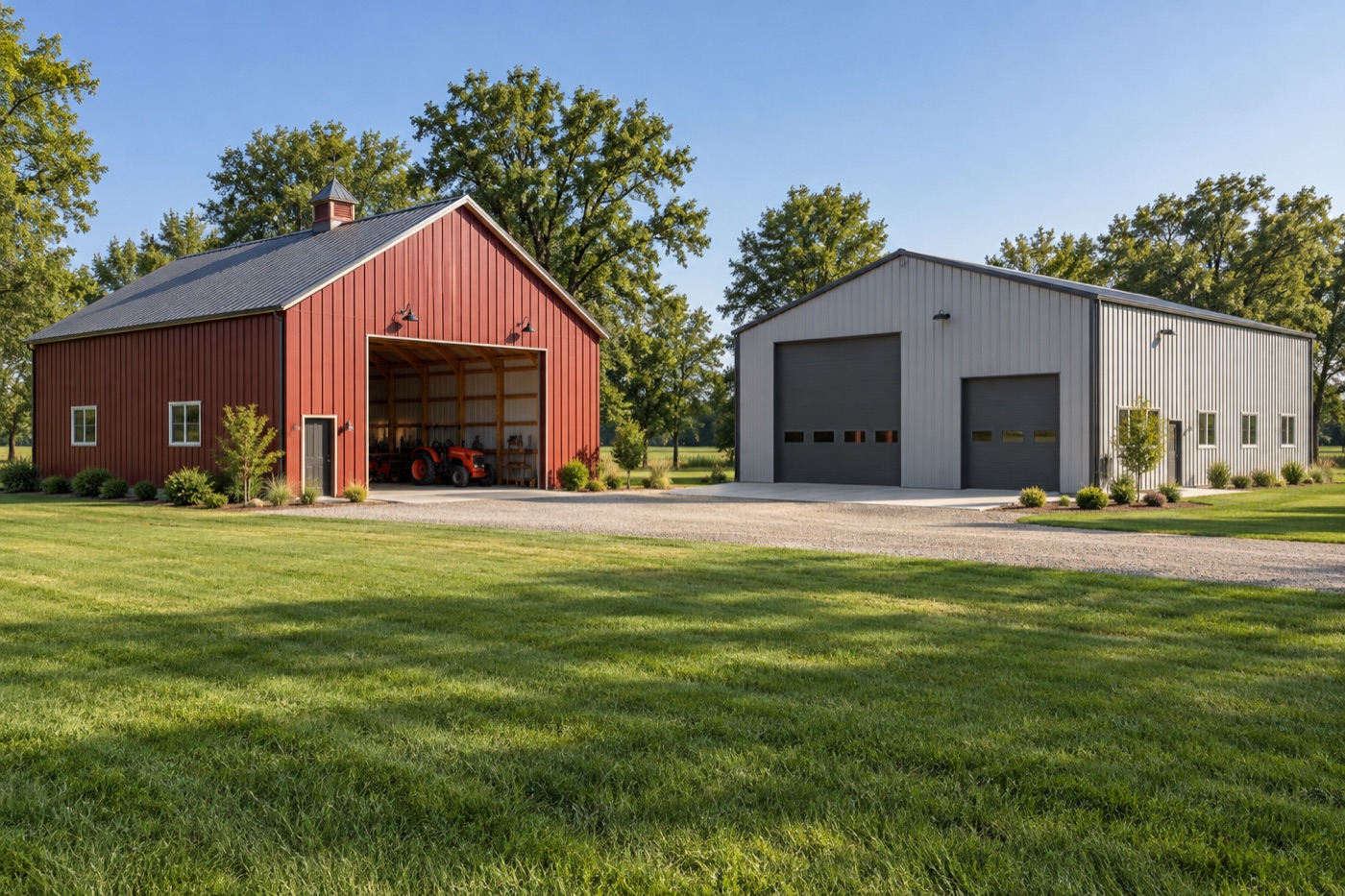
If you are planning a garage, workshop, farm building, or storage space, you may hear providers describe options as “steel buildings,” “metal buildings,” or “pole barns.” Those labels do not always describe the same thing. Before deciding which is better, ask what structural system each provider is proposing and how it fits your use, site, and project scope.
Metal Building Match helps project owners describe a project and identify relevant providers. It does not design or construct buildings; providers handle project-specific design, quotes, permits, and construction directly.
First, clarify the terms
“Steel building” may refer to a structural steel framing system, a pre-engineered package, or simply a building with a steel exterior. “Pole barn” commonly describes a post-frame building system. Post-frame buildings can also use metal cladding, so a metal exterior does not by itself tell you the framing approach.
The National Frame Building Association maintains technical resources about post-frame design, building regulations, structural loads, and foundations. Those distinctions matter when you compare proposals. Ask each provider to identify the framing system, structural design responsibility, and materials included.
Compare the options against your actual use
Make a short list of what the building must do. A storage building, vehicle garage, workshop, agricultural building, and commercial space can place different demands on access, clear interior area, ventilation, insulation, utilities, and occupancy. Rather than assume one framing system suits all of them, ask each provider how its proposed design addresses your list.
Questions to ask:
- What structural system is included in this proposal?
- How will posts, frames, or columns affect the interior layout?
- What clear interior spans or opening layouts are available for this design?
- Which door, window, or partition locations are practical?
- What is included for exterior panels, roof, trim, and weather detailing?
- Who prepares project-specific design documents?
- What needs review by the local building department?
These are questions for a provider, not a substitute for engineering or code review.
Consider site and location constraints
Your property may shape the options. Note delivery access, the proposed building location, nearby boundaries or structures, drainage concerns, and any visible slope. Ask what site information the provider needs and whether it expects a survey, geotechnical information, or another document.
Design requirements also depend on location and building use. FEMA’s Snow Load Safety Guide describes factors that influence snow-load design. Local codes, amendments, wind and snow conditions, and project-specific engineering should be confirmed by qualified professionals and the jurisdiction that serves your site.
Compare complete project scope
Two proposals may use similar labels but include different work. Check whether each one includes the same categories:
- Building package and delivery.
- Erection or installation.
- Foundation, slab, or post-foundation scope.
- Site preparation.
- Doors, windows, insulation, and ventilation.
- Interior finish and utilities.
- Engineering documents and permit support.
- Exclusions and work assigned to another contractor.
Ask the provider to put scope and exclusions in writing. Metal Building Match does not set provider proposals or make a recommendation based on price; its quiz helps gather project details and identify potentially relevant providers.
Use a decision checklist
Before choosing, be able to answer:
- What will the building be used for now?
- What space, access, and interior layout does that use require?
- What framing system is each provider proposing?
- How does the proposal address the site and location-specific design review?
- Who handles foundation, site prep, permits, and construction documents?
- Which elements are included, excluded, or still undecided?
- What questions should go to the local building department or design professional?
For a broader project-planning walkthrough, read Planning a Metal Building: What to Decide Before You Request Quotes. For a consistent request, use the Metal Building Quote Checklist.
Start with your project details
There is no universal winner between a steel-frame building and a post-frame building. The right option depends on what you are building, the site, the design and scope offered, and local requirements. Describe your project’s use, location, property status, and timing in the Metal Building Match project quiz. Provider availability depends on location and project requirements.
Frequently asked questions
Is a pole barn a metal building?
A pole barn is commonly a post-frame structure. It may have metal cladding, but the exterior material does not define the framing system. Ask what system the provider proposes.
Which is stronger, a steel building or a pole barn?
Strength cannot be decided from the category name alone. The project design, materials, connections, foundation, site conditions, and applicable requirements matter. Ask for project-specific documentation from qualified professionals.
Which type is better for a garage or workshop?
It depends on your layout, use, site, design needs, and what local providers can supply. Compare proposals with the same intended use and scope.
Can I compare quotes by building label alone?
No. Compare the framing system, included materials and services, foundation and site responsibilities, design documents, and exclusions.
Editorial note: verify terminology with the provider options presented in the live quiz before publishing. Do not position Metal Building Match as a designer, installer, engineer, or price-comparison authority.