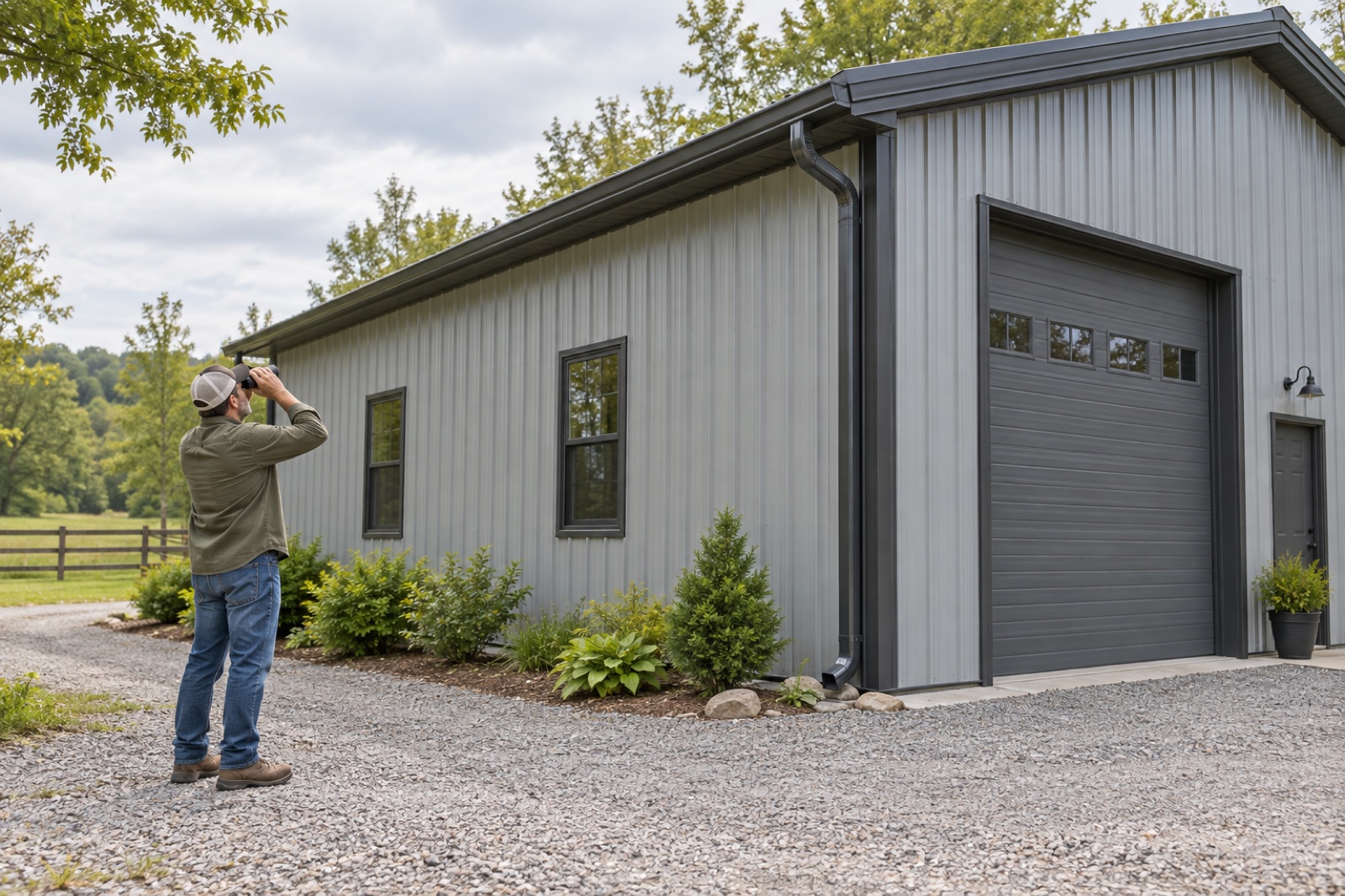
Plan on periodic visual checks and follow the care instructions for the exact panels and roof system on your building. Inspection intervals and cleaning or repair methods vary by product, finish, exposure, and warranty, so get the manufacturer's owner-care manual instead of relying on a generic maintenance schedule.
Routine checks can help you notice a change early, but they do not replace professional roof or structural inspections. This guide keeps homeowner checks at ground level and focuses on what to ask the provider about your particular building.
Start with the care manual for your building
Save the product names, panel and roof-system details, finish information, installation records, warranty documents, and the manufacturer's maintenance manual together. If you bought a kit, ask the supplier which instructions apply to the panels and accessories included in your order. If different companies supplied or installed parts of the building, keep their instructions and contacts with the matching items.
Product instructions can include specific inspection, cleaning, and warranty requirements. For example, Metl-Span's owner's maintenance manual tells owners of its insulated metal panels to make a complete visual inspection twice a year and describes what changes to look for. That schedule applies to the products covered by that manual, not automatically to every metal building.
Check visible surfaces and drainage from the ground
Walk around the building and look for new or changing conditions: damaged or lifted panels, creases or bulges, coating that is peeling or flaking, rust-colored marks, loose trim, damaged sealant, or signs of water getting inside. Look at the gutters, downspouts, and other visible drainage components for blockage or damage. A federal research guide on factory-coated metal siding and roofing identifies panel condition, coatings, fasteners, and drainage systems as parts of a condition assessment; its recommendations were developed for industrial buildings at Air Force installations, so use it as context rather than as a universal home-maintenance checklist.
Keep plants and stored materials from rubbing against panels, and note where water or other runoff reaches the exterior. Metl-Span's manual gives product-specific examples of contact that can stain or damage its panels. Mueller's care and maintenance guidance also recommends regular attention to roof joints, gutters, and drainage for its metal building and roofing products.
If you see a change, take a photo from a safe location and note when you first noticed it. Do not assume a stain is harmless or that a visible issue has one standard repair.
Use the inspection interval for your system
There is no single interval that fits every panel and environment. Metl-Span's manual gives a twice-yearly visual-check schedule for its insulated metal panels. The same U.S. government report recommended annual inspections for the factory-coated metal roofing and siding systems it studied at Air Force installations. The Metal Construction Association's assessment of a specific low-slope standing-seam roof system recommends regular inspection and discusses more frequent cleaning where leaves, pine straw, or dirt accumulate.
Those examples describe different products and settings. Ask your supplier or installer which schedule applies to your building and whether local exposure, nearby trees, or other site conditions change the care instructions. If the manual calls for checks after particular events, follow those directions.
Follow approved cleaning and finish instructions
Do not assume that a cleaner, paint, sealant, or fastener suitable for one building will work on another. Before washing panels, touching up a scratch, replacing a fastener, or applying a coating, check the product manual and warranty or contact the manufacturer. The Metl-Span manual, for example, describes care and repairs for its own panel products and directs owners to contact the manufacturer for some damage or service questions.
Keep the manual's contact information handy. If a product is still within a warranty period, record the condition and ask the manufacturer how it wants the issue reported before attempting a repair.
Bring in a qualified professional for roof-level checks
Contact the supplier, installer, or a qualified roofing professional if you notice active leaks, corrosion, lifted or damaged panels, recurring water marks, or a condition you cannot assess from the ground. Ask them to identify the cause and explain any repair method that could affect the panel finish, fasteners, seams, or warranty.
Safety note: Keep routine homeowner checks at ground level. Roof work involves fall hazards; OSHA's fall-prevention guidance describes planning, proper equipment, and training for workers. Arrange roof-level inspection or repair through qualified professionals.
Ask about upkeep while planning a new building
Before choosing a system, ask the provider for the owner's maintenance manual and the inspection interval for the exact panels, finish, roof, and accessories being proposed. Confirm which cleaning methods and touch-up products are approved, how to report a concern, and whether particular inspection or maintenance steps are tied to a warranty.
The metal building quote checklist can help you compare what providers include and which documents they supply. For a wider project overview, see planning a metal building. If you are still deciding how the building will be used, add that context when you share your project with Metal Building Match. The service helps connect property owners with relevant building providers; it does not design, engineer, quote, permit, manufacture, or install buildings.